Oily Roots and Dry Ends? How to Build a Balanced Haircare Routine
Haircare / Everyday routines
Freshly washed roots, but ends that feel rough. Or soft lengths, but a scalp that becomes oily quickly. If this sounds familiar, choosing between a shampoo for greasy hair and a conditioner for dry hair can feel unnecessarily confusing.
The useful starting point: choose your shampoo for the scalp and your conditioner for the lengths. The two products do not have to come from the same range to meet different needs.
Think about roots and ends separately
“Oily hair” describes only part of what you are noticing. Your scalp may need cleansing while the lengths still need help with softness and detangling. Start with two observations: how quickly your roots feel oily, and where your hair feels rough or difficult to comb.
Make those observations before changing several products at once. It is easier to decide whether a routine suits you when you know which concern each step is meant to address. A shampoo for oily roots does not need to be followed by skipping conditioner on dry ends.
A simple wash-day routine
- Focus shampoo on the scalp. The American Academy of Dermatology recommends cleansing the scalp rather than rubbing shampoo through the entire length. Let the rinse water carry it through the hair.
- Use conditioner where it is needed. For fine or straight hair, the AAD suggests concentrating conditioner on the ends. Dry or curly hair may need it throughout the lengths. Follow your product's instructions.
- Detangle gently. Work carefully through knots rather than pulling a brush through them. The AAD recommends a wide-tooth comb for wet hair, with the timing adapted to your hair texture.
- Review your wash frequency. Base it on how dirty or oily your hair becomes. There is no universal rule that everyone should wait the same number of days.
Two ways to shop the routine
A range made for combination hair: APIVITA
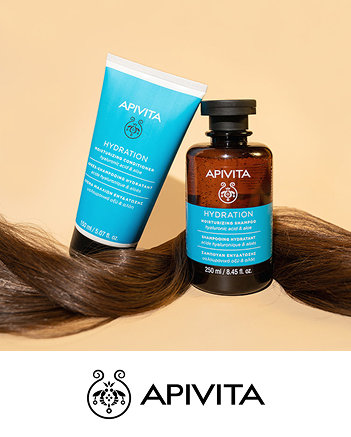
APIVITA Oily Roots & Dry Ends Shampoo and its matching conditioner are specifically named for this combination of concerns. APIVITA lists nettle and propolis as featured ingredients in the range.
These are useful products to compare when you want a coordinated routine. Check each page for current availability and the full ingredient list. They should not be confused with APIVITA's oily-dandruff shampoo, which has a different intended purpose.
A shampoo and conditioner chosen separately: RAUSCH
RAUSCH Degreasing Shampoo with Seaweed is intended for greasy hair and roots. For lengths that need a more nourishing step, compare RAUSCH Nourishing Conditioner with Wheatgerm, which is designed for dry, stressed hair.
This is an editorial pairing based on the different purposes of the products, rather than a promise of a particular result. Start with the label's directions and consider how the combination feels on your own hair. You can also browse shampoos and conditioners separately.
Habits worth reviewing
Adding more product is not always the most useful first change. Look at how you handle your hair after washing. The AAD advises against vigorous towel rubbing and repeated high heat. Gently absorb water with a towel or T-shirt, and reduce the heat setting when styling.
It can help to keep a short note of your routine: the shampoo used, where you put conditioner, how often you wash and how the ends feel afterwards. This is a practical way to avoid buying a succession of products without knowing what changed.
What if oily roots come with flakes or itching?
Oiliness alone is a different shopping concern from an itchy, flaky scalp. If flakes or discomfort are the main problem, read our RAUSCH scalp guide with insights from Dr Archana's podcast. Persistent redness, soreness or significant flaking warrants advice from a pharmacist or healthcare professional.
Frequently asked questions
Can I mix shampoo and conditioner brands?
You can choose each step by its purpose rather than matching the bottle. Read both sets of directions, particularly if either product is a scalp treatment.
Should I avoid conditioner because my roots are greasy?
You may still benefit from conditioner on dry lengths. Placement and the amount used matter; follow the directions rather than applying every conditioner directly to the scalp.
Will a richer conditioner fix split ends permanently?
Conditioner can make damaged hair feel smoother and easier to manage, but it does not turn a split strand back into undamaged hair. Avoid treating the word “repair” on a bottle as a promise of permanent restoration.
Explore by concern
Oily hair and scalp · APIVITA · RAUSCH
Sources
AAD: Tips for healthy hair; AAD: Hair-care habits that can damage hair; APIVITA: Greasy Roots & Dry Ends; and the linked product details. Written by Cult Essentials Editorial. Checked 15 November 2026.